Spring naar de hoofdinhoud

Collaborate

Baker Supports Biotech Training in Leiden

By

Read more about Baker Supports Biotech Training in Leiden

Empowering Biotech Education

Baker Donates Advanced Equipment to the Biotech Training Facility

At Baker, we are committed to advancing scientific excellence by supporting the institutions that prepare tomorrow’s innovators. This mission came to life through our collaboration with the Biotech Training Facility (BTF) in Leiden, where we donated three of our high-performance laboratory solutions to help strengthen their hands-on biotechnology training programs.

BTF is a premier education and training center that offers real-world, GMP-aligned experience in biopharmaceutical production and biotechnological processes. Their impact extends across universities, industry professionals, and the growing life science workforce in the Netherlands and beyond.

A Shared Commitment to Training, Safety, and Innovation

Our contribution includes three key technologies essential to modern bioprocessing and cell culture workflows:

  • BioVanguard Biosafety Cabinet – to protect researchers and their work
  • SCI-tive Cell Culture Workstation/Isolator – to ensure a controlled research space
  • ReCO₂ver™ Incubator – to support optimal cell culture conditions.

These systems enable BTF to train students and professionals on the same state-of-the-art equipment used in high-level biopharmaceutical manufacturing and research facilities.
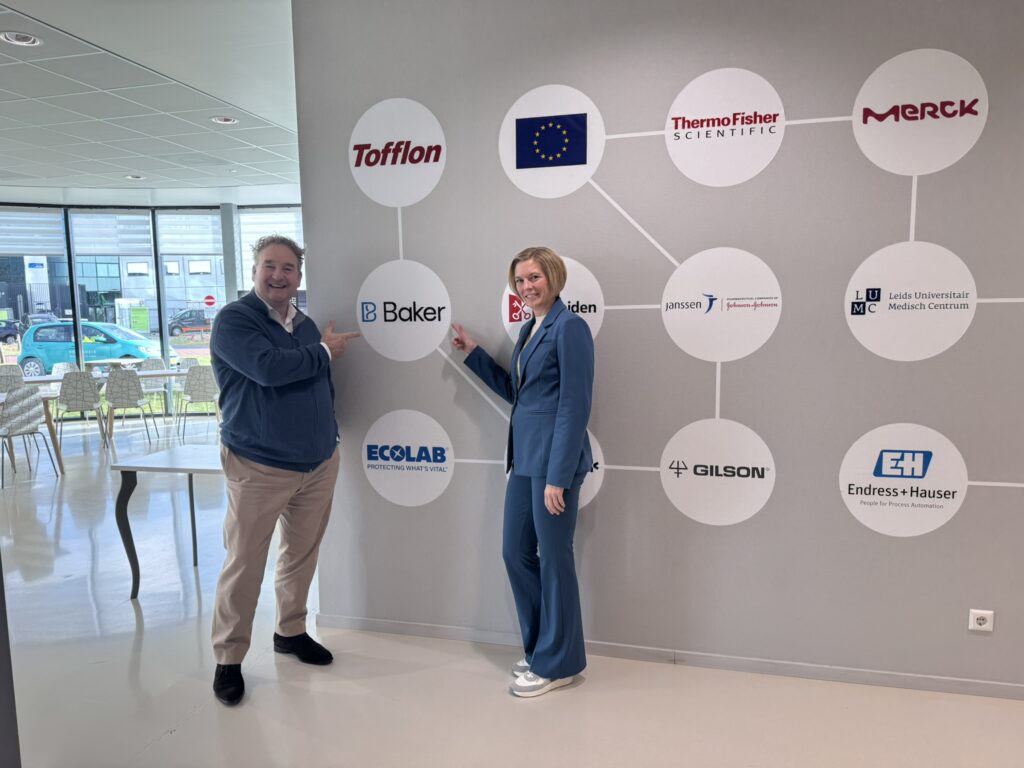
Working Together for Biotech Education

BTF shared their enthusiasm for this collaboration, stating:

“We are very proud to have The Baker Company as one of our main sponsors! Their equipment will allow us to give training on important aspects of biopharmaceutical production. Looking forward to many more years of exciting collaboration. Special thanks to Diko Strietman.”

We are equally proud to support their mission. By equipping BTF with cutting-edge technology, we reinforce our shared commitment to safety, innovation, and the future of biotech education. Together, we are helping prepare the next generation of scientists and bioprocessing professionals, and investing in the advancement of life science training in the Netherlands.
King’s College London

By

Read more about King’s College London

Physiological oxygen facility at King’s
College London

Collaboration

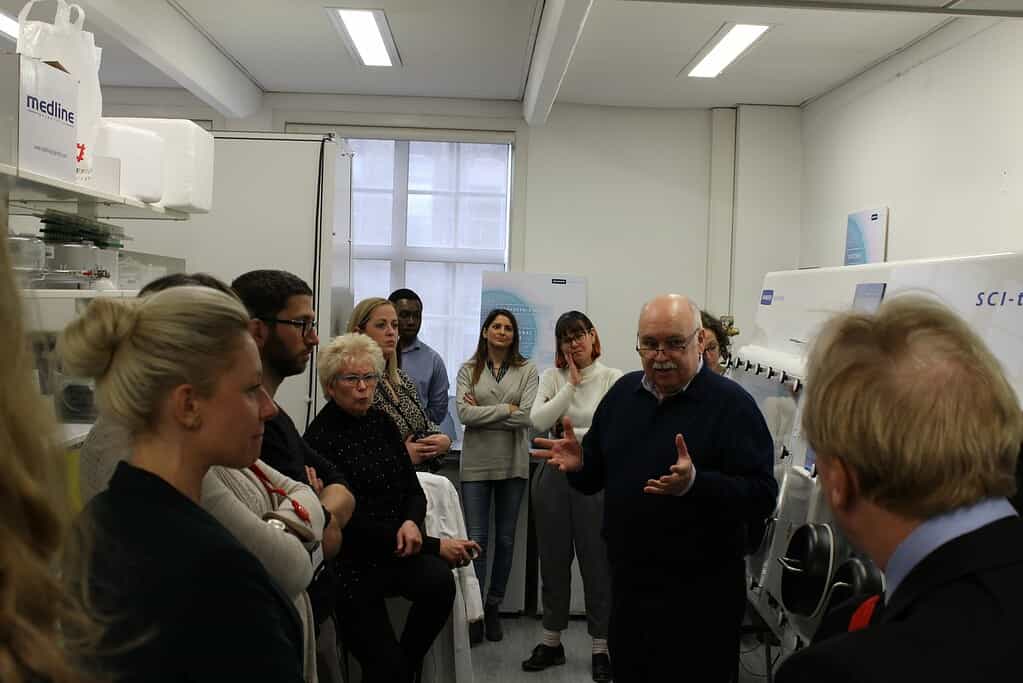
Baker Ruskinn are proud to collaborate with Professor Giovanni E. Mann and Dr Richard CM Siow at King’s College London to bring Physiological Oxygen to the forefront of the life science community. The state of the art facility, based in the heart of London at the cutting-edge research university, aims to bring together Baker Ruskinn’s industry leading technologies with tomorrow’s pioneers. Regular workshops invite industry leaders and students alike to experience all things Cell Culture.

Education

Experience hands on product training with Baker and gain an insight into the importance of replicating physiological oxygen levels for standard in vivo culture models with cardiovascular cells. Take part in lectures and keynotes led by experts Professor Giovanni E Mann and Dr Richard CM Siow, with over 25years of research expertise in the field of free radical biology.

Take a look at our resources section below for more information on previous workshops. 

The Wales Heart Research Institute

By

Read more about The Wales Heart Research Institute

THE WALES HEART
RESEARCH INSTITUTE

The Wales Heart Research Institute

Accurately Simulating Blood Vessel Microenvironment

Research by Dr. Philip James and his team at the Wales Heart Research Institute at Cardiff University School of Medicine focuses on vascular performance and the differences between healthy and diseased blood vessels. Dr. James’ research has been ongoing for several years, but his team has been somewhat limited by the technologies and model systems available. Now, the team has developed a new application, using an Invivo2 physiological workstation from Baker Ruskinn (a division of Baker), which simulates the in-body oxygen environment of blood vessels.

Technological Limits to Achieving a Stable Low-Oxygen Atmosphere

Historically, the “gut bath” system is a research tool for measuring the tension (or stretch) of blood vessels in the laboratory setting. The process involves excising a blood vessel and taking cross sectional slices to form rings. The rings are then hung between hooks linked to a force transducer and a recording device that measures responses to chemicals or pharmaceuticals. The in-body oxygen environment is typically simulated by vigorous bubbling of a gas through a narrow gauge tube into the bottom of a large open chamber. Although different gas mixes can be used, the open system limits the low-oxygen ranges achievable and results in considerable variance depending on the positioning in the tissue holder.

Jessica Dada, a Ph.D. student working on Dr. James’ team explained, “This has severely hampered the ability to study the low-oxygen microenvironment and the effect of subtle changes in O2 on vessel function. In our studies, we wanted to accurately control the degree of blood vessel oxygenation.”

Opening the Door to Discovery

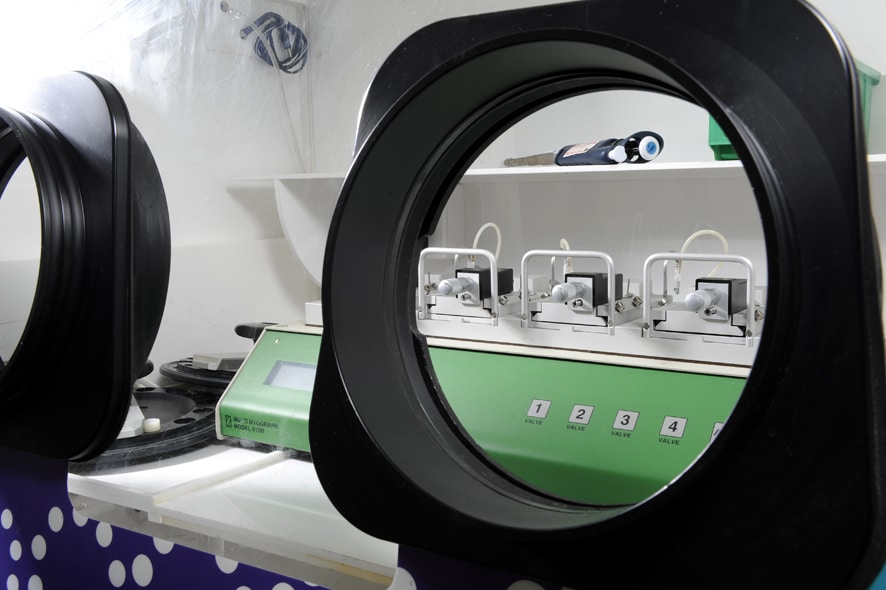
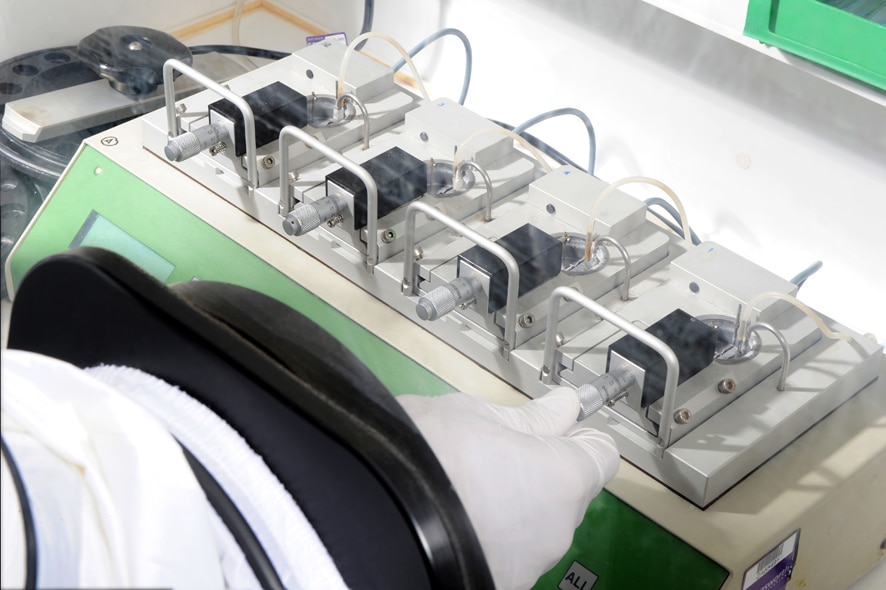
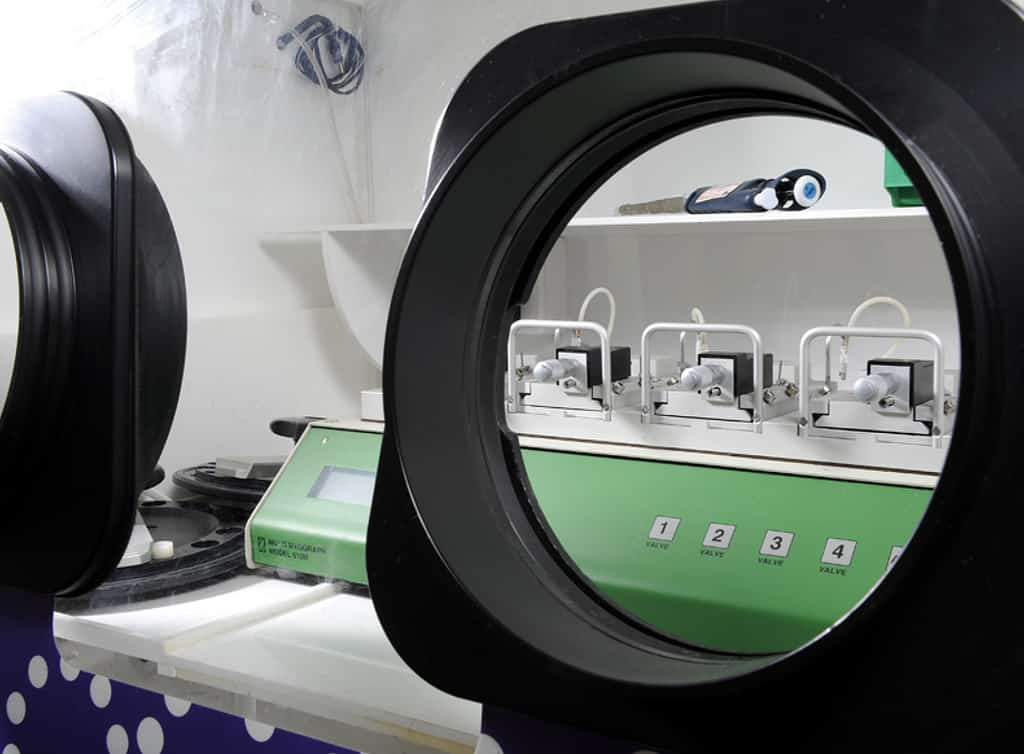
To solve this problem, Dr. James’ team adapted Baker Ruskinn’s Invivo2 physiological workstation by introducing a complete myograph system into the oxygen chamber (see Figure 1). The accessory units and recording system remain outside. The advantage of this configuration is that difficult microscopic dissection of tissue can be undertaken outside the chamber, and blood vessel segments, which may be sliced as thin as tenths of 1 mm, can be mounted microscopically on the removable plates. In the system at the Institute, four of these plates are run in parallel. The plates of mounted tissue are introduced to the Invivo2 via the interchange port and the chamber is set to produce the desired oxygen environment. To ensure that rapid changes in O2 can be undertaken, and rapid mixing of the buffer solution surrounding the tissue sample, a micro-tube bubbles the base of the small reservoir, driven by a small pump (such as aquapump).

“This has really opened doors for us in terms of what we can achieve, and we have already applied this simple technique to show the importance of oxygen in regulating blood vessel opening, a completely new finding,” said Dr. James. “It has allowed us to keep the blood vessels at extremely low O2 , and to introduce micro amounts of oxygen directly to the test baths under extremely controlled conditions.”

This novel application of Baker Ruskinn physiological workstation technology could be applied across a broad range of cardiovascular systems.

About the Wales Heart Research Institute

The Wales Heart Research Institute at Cardiff University School of Medicine is the first purpose-built, dedicated cardiovascular research institute in the United Kingdom. The Institute involves laboratory-based and clinical research scientists working together as a team to confirm Wales’ ability to play an increasingly important scientific role internationally.

The research being carried out by Dr. James’ team, funded by the British Heart Foundation, focuses on finding the mechanisms by which red blood cells can relax blood vessels. This is extremely important to maintain healthy blood vessels and an adequate supply of oxygen and other nutrients to all tissues. These mechanisms are thought to accrue even greater importance in small vessels and in disease states where normal processes are out of balance.

The University of Iowa

By

Read more about The University of Iowa

The University of Iowa

The University of Iowa Laryngeal Molecular and Cell Biology Laboratory

Biosafety Cabinet at the University of Iowa Laryngeal Molecular and Cell Biology Laboratory Provides Safe and Energy-Efficient Environment

Many professionals depend on using their voices, but schoolteachers happen to be most at risk for developing voice problems. Studies show that teachers are up to 32 times more likely to experience voice damage than people within other occupations.

Uncovering voice problems begins at the molecular level. The University of Iowa Laryngeal Molecular and Cell Biology Lab is one of a handful of laboratories in the United States exploring the science of voice production and the cellular processes behind it. Their work involves uncovering what destroys the voice but also what may help to heal it.

Specifically, the laboratory examines changes to living tissues due to short- and long-term vibration exposure. To accomplish this, the lab uses a rheometer, which administers vibrations and measures their effects on cells. The experiments necessitate a system that supports long-term growth of cells and near-sterile conditions. Therefore, the laboratory is equipped with two biological safety cabinets from Baker. The Baker SterilGARD® e3 provides a near-sterile atmosphere for the cells, housing the rheometers and custom incubators. Additionally, a SterilGARD houses cell culture work.

A single experiment can last up to a month, therefore near-sterile conditions are paramount to the integrity of the research. Since the cabinet must remain on at all times, the SterilGARD e3’s ReadySAFE™ mode is heavily utilized. The ReadySAFE function allows the cabinet to continuously operate and maintain safe conditions while the viewscreen is closed. Exclusive to Baker, the ReadySAFE technology permits the user to leave the cabinet for long periods of time, or overnight, and it also cuts energy use dramatically.

Because the experiments use supporting experimental equipment, including the rheometer and incubator, the cabinet’s cable port system is a crucial element for the lab. In Baker cabinets, cable ports pass through negative pressure side walls, providing convenient access to cables and tubing with an unobstructed work area.

Understanding cell pathways involved in vocalization is leading to a comprehension of how the voice is stressed or damaged. The research at The University of Iowa could result in new treatments to help heal damaged voices, or prevent damage altogether. In doing so, the work can serve to help not just teachers, but telecommunications staff, members of the clergy, counselors, and singers

Wise Laboratory

By

Read more about Wise Laboratory

Wise Laboratory

Wise Laboratory at the University of Southern Maine

Biosafety Cabinets at the University of Southern Maine’s Wise Laboratory are at the Heart of High-Impact Toxicology Research

Where do people go when they want to change the world? The Wise Laboratory at the University of Southern Maine in Portland – right in Baker’s backyard – is one such place, attracting scientists from a diversity of backgrounds such as toxicology, molecular epidemiology, genetics, zoology and inorganic chemistry. Led by husband-and-wife team, Dr. John Pierce Wise and Sandra Wise, and armed with a state-of-the-art research facility (which includes a mix of newer SterilGARD® biosafety cabinets and a few stalwart older models from Baker), scientists are engaged in multidisciplinary research to understand the effects of environmental contaminants on humans and marine life. The results of their research provide information to scientists, policymakers and the general public about a variety of high-impact environmental and economic issues.

Due to the specialized nature of the work being performed, Dr. Wise’s research requires biosafety equipment designed for flexibility and performance, without sacrificing safety.

“Our Baker biosafety cabinets provide a safe and comfortable environment for working with our cells and tissues in a variety of conditions,” said Sandra Wise, Program Director for the Wise Laboratory.

Biological safety cabinets from Baker provide the ideal environment for cell culture and analysis in all aspects of the laboratory’s research. Here is just a sample of the research happening at the Wise Laboratory.

The Toxicological Impact of the Deepwater Horizon Oil Disaster on Sperm Whales

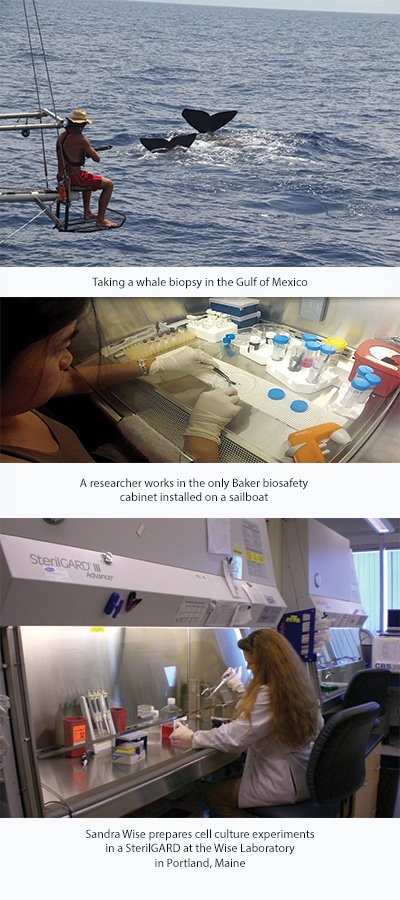
The Wise Laboratory is leading an exploration of the impact of the Deepwater Horizon oil rig explosion on the wildlife of the Gulf of Mexico. This multi-year study includes several ocean voyages on the only sailboat in the world equipped with a cell culture laboratory, which features a 3-foot model of Baker’s SterilGARD, a Class II Type A2 biological safety cabinet.

“We are proud to have the only Baker biosafety cabinet that has been specifically developed for our needs and installed for use on a sail boat!” said Sandra Wise.

The work being performed is not only about the effects of oil and chemical dispersants on the Gulf’s marine residents, but also about its overarching impact on the larger ocean ecosystem. The results have implications for human health and the economic well-being of the Gulf and surrounding areas as well.

On the boat, the team collects whale skin biopsies and creates whale cell lines in order to measure the levels and effects of Deepwater Horizon contaminants in the whales themselves, as well as to evaluate the ability of such contaminants to kill whale cells and cause DNA damage. The data will provide a clear understanding of the immediate and long-term potential consequences of the largest oil crisis in U.S. history.


How Hexavalent Chromium Causes Lung Cancer

Back in the lab, the Wise Laboratory is also studying the impact of hexavalent chromium on lung cancer. Hexavalent chromium compounds are a group of chemical substances that contain the metallic element chromium in its positive-6 valence (hexavalent) state. It is a significant public health risk, found in high levels at hundreds of hazardous waste sites in the United States alone, as well as being a component of cigarette smoke. The Wise Laboratory is the first laboratory to show how hexavalent chromium causes chromosomal instability, a type of genomic instability typical of lung cancer. In one experiment, researchers exposed cells to particulate chromate inside a Baker biosafety cabinet and induced the production of up to 18 centrosomes during mitosis, leading to metaphases with abnormal numbers of chromosomes. Studying such mechanisms helps identify potential targets for the treatment and prevention of lung cancer.

Nanoparticles: The Ubiquitous Cytotoxin

Cell culture studies have shown that nanoparticles (engineered particles that have at least one dimension of a size under 100 nm) can be cytotoxic – a sobering finding given their widespread use in everything from sunscreen to semiconductors. Little is known about their particular cytotoxic effects. With Baker biosafety cabinets safeguarding their researchers against nanoparticle exposure, the Wise Laboratory is investigating the effects of nanoparticles on DNA and genomic instability in order to identify their potential toxic effects.

The Toxicology of Long-Term Space Exploration

Astronauts are exposed to much higher levels of cosmic radiation than people on the earth’s surface. To investigate the damaging effects of cosmic rays, researchers at the Wise Laboratory expose human cell culture experiments to chromate inside Baker biosafety cabinets, attach them to a helium weather balloon, and then send them 90,000 feet into the atmosphere. When they fall back to earth, the cell cultures are analyzed to see if the extreme high-altitude conditions make the chromate damage worse.

Another Wise Laboratory study examines the effects of altered gravity on DNA and chromosomes by sending cell culture experiments on a rollercoaster-like airplane ride with a flight pattern that simulates both microgravity and hypergravity. The researchers discovered that cells become more susceptible to chemically-induced chromosome damage in altered gravity. The findings from both these experiments will inform the development of occupational exposure level protocols for astronauts on long-term space missions, as well as potential preventive measures.

To find out more about the Wise Laboratory, visit their website at http://usm.maine.edu/toxicology/.

The Eagleson Institute

By

Read more about The Eagleson Institute

The Eagleson Institute

The Eagleson Institute

Education, Certification & Safety Training
Chemical & Environmental Safety in the Lab

The Eagleson Institute is a non-profit foundation with a mission to globally promote the principles and practices of health and safety in the life sciences community

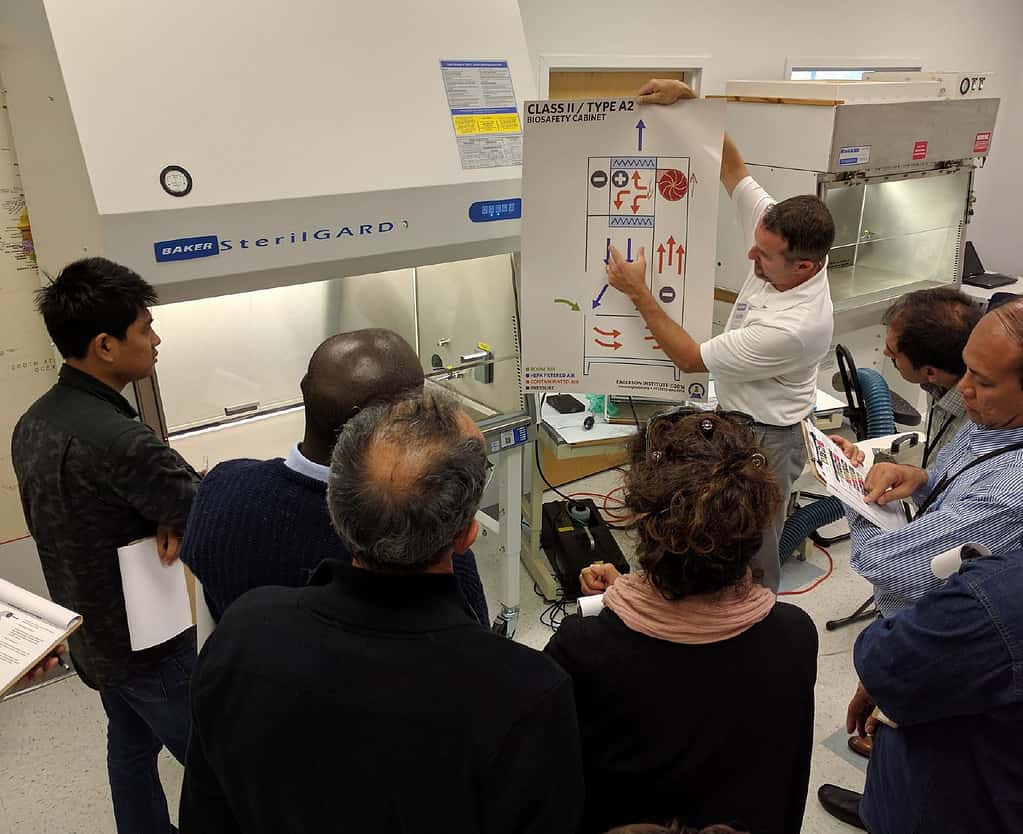
Eagleson Institute classes consist of lectures, demonstrations, break-out sessions, problem solving, role-playing and hands-on training.  All programs are carefully designed to engage the adult learner with hands-on workshops to refine their technical skills.

Digital Training Media

  • Biological Safety Cabinets: A Web-Based Training
  • Effective Use of Class II Biological Safety Cabinets
  • Safe Use of Chemical Fume Hoods

The Eagleson Institute was founded in 1989 by Dennis Eagleson, CEO of Baker, in memory of his father John M. Eagleson, Jr. Jack was President of Baker, a manufacturer of Biological Safety Cabinets, Clean Benches and Fume Hoods, from 1959 until his death in 1988. Beginning his career as an engineer, he was a pioneer in the development and testing of ventilation equipment. He was also a strong proponent of sharing information and teaching others. Whether a formal training program or an informal discussion, Jack liked to challenge the minds of his employees and others he met. These are the qualities for which the Institute was founded and for which the memory of Jack lives on.