Wise Laboratory
Read more about Wise LaboratoryWise Laboratory
Wise Laboratory at the University of Southern Maine
Biosafety Cabinets at the University of Southern Maine’s Wise Laboratory are at the Heart of High-Impact Toxicology Research
Where do people go when they want to change the world? The Wise Laboratory at the University of Southern Maine in Portland – right in Baker’s backyard – is one such place, attracting scientists from a diversity of backgrounds such as toxicology, molecular epidemiology, genetics, zoology and inorganic chemistry. Led by husband-and-wife team, Dr. John Pierce Wise and Sandra Wise, and armed with a state-of-the-art research facility (which includes a mix of newer SterilGARD® biosafety cabinets and a few stalwart older models from Baker), scientists are engaged in multidisciplinary research to understand the effects of environmental contaminants on humans and marine life. The results of their research provide information to scientists, policymakers and the general public about a variety of high-impact environmental and economic issues.
Due to the specialized nature of the work being performed, Dr. Wise’s research requires biosafety equipment designed for flexibility and performance, without sacrificing safety.
“Our Baker biosafety cabinets provide a safe and comfortable environment for working with our cells and tissues in a variety of conditions,” said Sandra Wise, Program Director for the Wise Laboratory.
Biological safety cabinets from Baker provide the ideal environment for cell culture and analysis in all aspects of the laboratory’s research. Here is just a sample of the research happening at the Wise Laboratory.
The Toxicological Impact of the Deepwater Horizon Oil Disaster on Sperm Whales
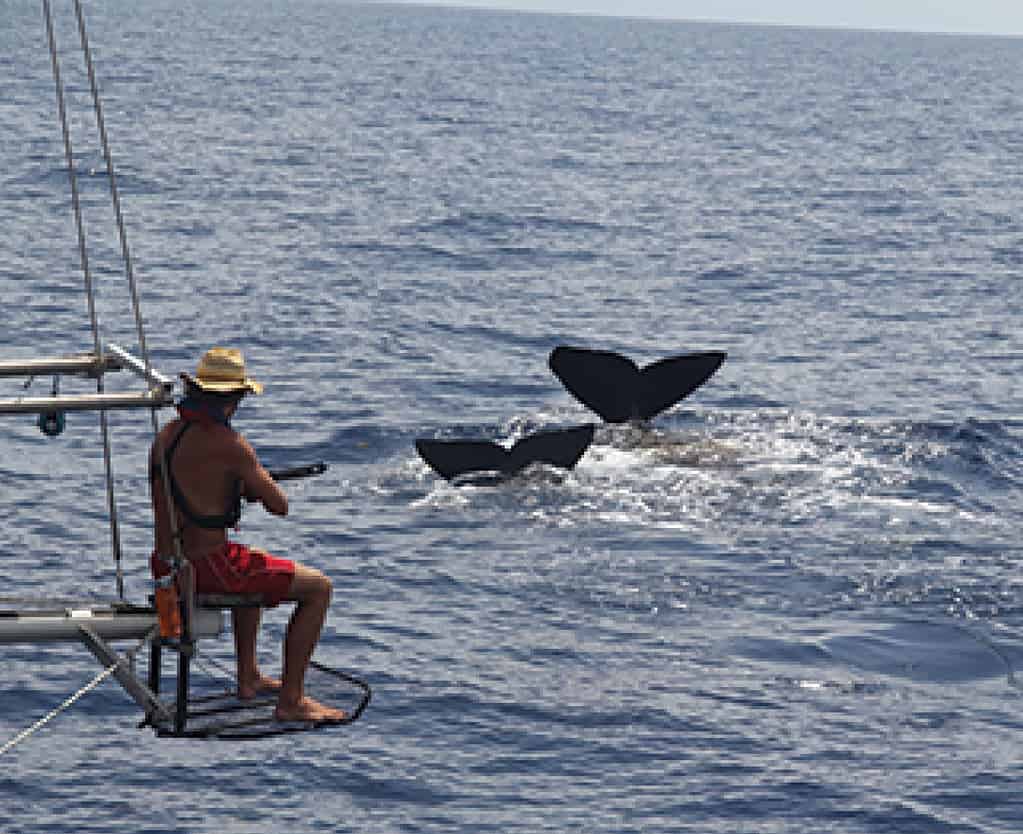
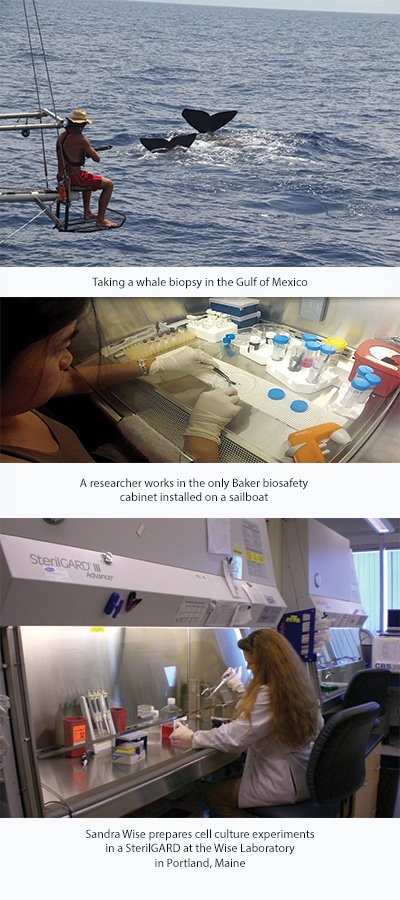
The Wise Laboratory is leading an exploration of the impact of the Deepwater Horizon oil rig explosion on the wildlife of the Gulf of Mexico. This multi-year study includes several ocean voyages on the only sailboat in the world equipped with a cell culture laboratory, which features a 3-foot model of Baker’s SterilGARD, a Class II Type A2 biological safety cabinet.
“We are proud to have the only Baker biosafety cabinet that has been specifically developed for our needs and installed for use on a sail boat!” said Sandra Wise.
The work being performed is not only about the effects of oil and chemical dispersants on the Gulf’s marine residents, but also about its overarching impact on the larger ocean ecosystem. The results have implications for human health and the economic well-being of the Gulf and surrounding areas as well.
On the boat, the team collects whale skin biopsies and creates whale cell lines in order to measure the levels and effects of Deepwater Horizon contaminants in the whales themselves, as well as to evaluate the ability of such contaminants to kill whale cells and cause DNA damage. The data will provide a clear understanding of the immediate and long-term potential consequences of the largest oil crisis in U.S. history.
How Hexavalent Chromium Causes Lung Cancer
Back in the lab, the Wise Laboratory is also studying the impact of hexavalent chromium on lung cancer. Hexavalent chromium compounds are a group of chemical substances that contain the metallic element chromium in its positive-6 valence (hexavalent) state. It is a significant public health risk, found in high levels at hundreds of hazardous waste sites in the United States alone, as well as being a component of cigarette smoke. The Wise Laboratory is the first laboratory to show how hexavalent chromium causes chromosomal instability, a type of genomic instability typical of lung cancer. In one experiment, researchers exposed cells to particulate chromate inside a Baker biosafety cabinet and induced the production of up to 18 centrosomes during mitosis, leading to metaphases with abnormal numbers of chromosomes. Studying such mechanisms helps identify potential targets for the treatment and prevention of lung cancer.
Nanoparticles: The Ubiquitous Cytotoxin
Cell culture studies have shown that nanoparticles (engineered particles that have at least one dimension of a size under 100 nm) can be cytotoxic – a sobering finding given their widespread use in everything from sunscreen to semiconductors. Little is known about their particular cytotoxic effects. With Baker biosafety cabinets safeguarding their researchers against nanoparticle exposure, the Wise Laboratory is investigating the effects of nanoparticles on DNA and genomic instability in order to identify their potential toxic effects.
The Toxicology of Long-Term Space Exploration
Astronauts are exposed to much higher levels of cosmic radiation than people on the earth’s surface. To investigate the damaging effects of cosmic rays, researchers at the Wise Laboratory expose human cell culture experiments to chromate inside Baker biosafety cabinets, attach them to a helium weather balloon, and then send them 90,000 feet into the atmosphere. When they fall back to earth, the cell cultures are analyzed to see if the extreme high-altitude conditions make the chromate damage worse.
Another Wise Laboratory study examines the effects of altered gravity on DNA and chromosomes by sending cell culture experiments on a rollercoaster-like airplane ride with a flight pattern that simulates both microgravity and hypergravity. The researchers discovered that cells become more susceptible to chemically-induced chromosome damage in altered gravity. The findings from both these experiments will inform the development of occupational exposure level protocols for astronauts on long-term space missions, as well as potential preventive measures.
To find out more about the Wise Laboratory, visit their website at http://usm.maine.edu/toxicology/.